

What is diagnostic ultrasound/ultrasound-guided dry needling?
Dry needling is a minimally invasive procedure that involves the insertion of thin needles (similar to acupuncture needles) into specific trigger points or myofascial (muscle and connective tissue) knots in the body. Unlike acupuncture, which is based on traditional Chinese medicine principles and aims to balance the body’s energy flow, dry needling is rooted in Western medicine and focuses on treating muscle tightness and pain. Dry needling uses small needles to cause micro-damage to your muscle tissues. This increases blood flow to the area of treatment, increases your body’s healing response, and reduces pain.
Musculoskeletal diagnostic ultrasound imaging is one of the many state-of-the-art technologies that we have here at Central Virginia Physical Therapy. Ultrasound imaging can be used to look at different tissues in the body including, but not limited to, tendons, ligaments, bursa, nerves, and muscles. Some advantages of ultrasound over other imaging modalities such as MRI and X-rays are the ability to complete dynamic imaging, to easily compare side to side, its portability, and its lower cost. Musculoskeletal diagnostic ultrasound is effective in visualizing tendinopathy, tendon/ligament tears, bursitis, synovitis, joint erosions, calcifications, muscle tears, loose bodies, foreign bodies, and nerve entrapment/subluxation.
The three key findings on ultrasound that serve to identify tendinopathy are increased cellularity, neovascularization, and disrupted fibers. Increased cellularity is defined as thickening of the tendon and a mix of hyper- and hypo-echoic tissue on the image, whereas a healthy tendon would be all hyperechoic. A healthy tendon does not get much blood flow, so when neovascularization (formation of new blood vessels) is seen in the tendon, this is indicative of tendinopathy. A healthy tendon also has very linear fibers, so when the fiber orientation is not as linear or disrupted, it can indicate tendinopathy.
Diagnostic ultrasound is not only beneficial for identifying tendinopathy, but also provides a way to track progress over time. Decreased thickening, decreased neovascularization, and increased hyperechoic texture are all improvements that can be objectively measured through ultrasound imaging. This can help Physical Therapists determine how to progress treatment as well as safely return someone back into more rigorous physical activity.
There are many different ways to treat tendinopathy including activity modification, strengthening, and bracing, but dry needling can also help in the resolution of tendinopathy and its associated pain. In dry needling, a needle is used to penetrate the affected tendon, which creates local bleeding and inflammation to disrupt the chronic degeneration and kick-start the healing process. Research shows that individuals with tendinopathy have significant reductions in pain following this procedure, and it is considered a quick and easy treatment with no reported adverse outcomes.
There is even greater evidence supporting the use of ultrasound to guide dry needling treatments. Using ultrasound to visualize the needle has been shown to significantly improve the accuracy of targeting the affected area compared to relying solely on palpation and anatomical landmarks. As a result, this can improve outcomes related to pain and function, as the area consistently receives the treatment it needs.
Here at Central Virginia Physical Therapy (CVPT), our goal is to get patients back to a pain-free and fulfilling life. We are able to integrate the latest research and implement it into clinical practice by utilizing both ultrasound imaging and dry needling. This is one of the many ways that sets us apart from other clinics and demonstrates our dedication to giving each patient the best care possible.
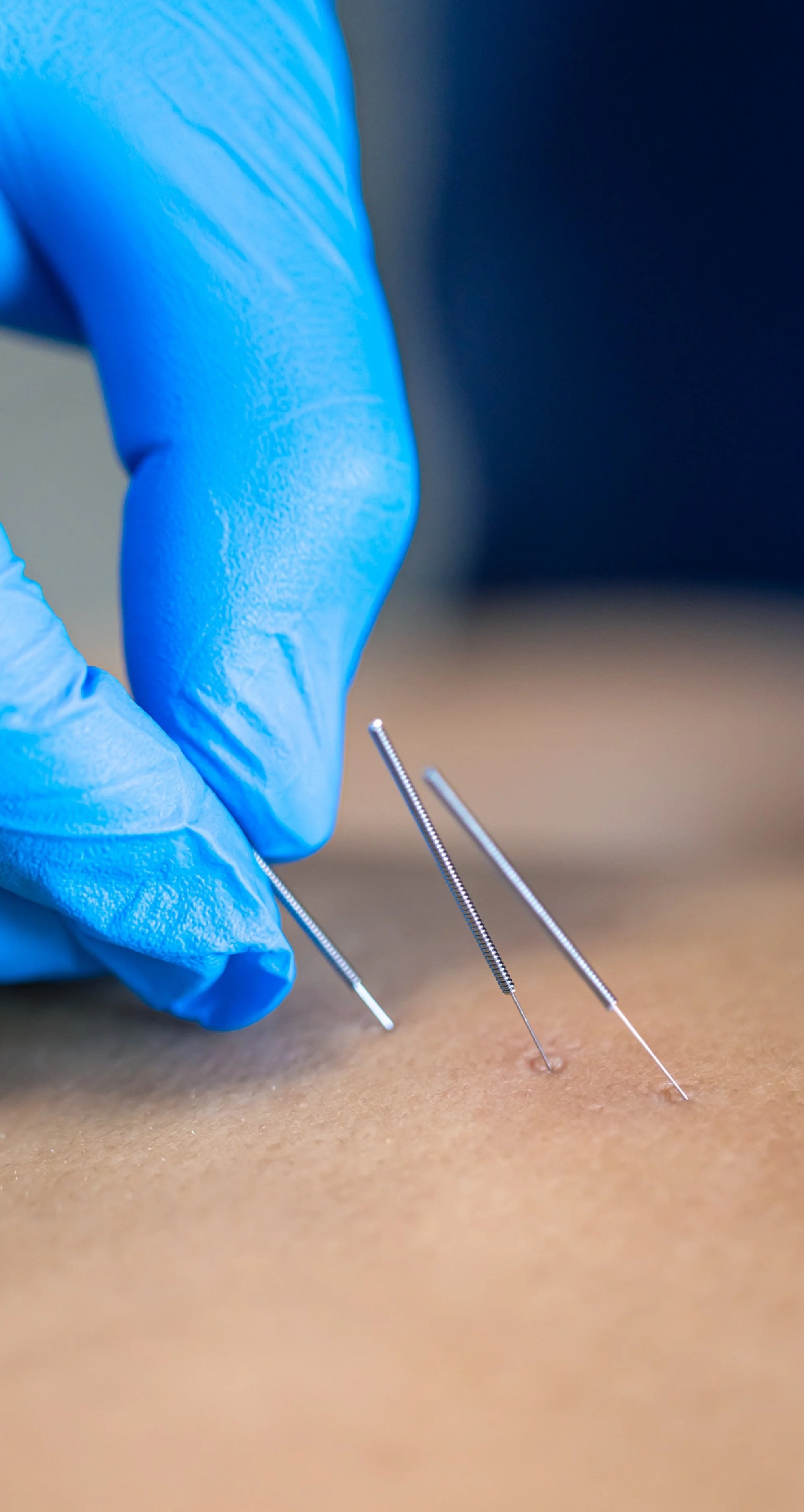
Does dry needling help my pain?
The primary goals of dry needling are to:
Relieve Pain: The needles are inserted into trigger points or tight muscles to help release tension, reduce pain, and improve blood flow in the affected area.
Improve Range of Motion: By addressing muscle tightness and knots, dry needling can help improve joint mobility and flexibility.
Promote Healing: The insertion of needles can stimulate the body’s natural healing processes by increasing blood flow and promoting the release of substances that aid in tissue repair.
Reduce Muscle Spasms: Dry needling can help relax muscles and alleviate spasms, which can be particularly beneficial for individuals with chronic muscle pain.
The term “dry” needling distinguishes this technique from “wet” needling, which involves injecting a substance (such as medication) into the body through a needle.
The benefits of dry needling can last for several days or weeks. The number of treatments needed will vary depending on the individual’s condition.
Who can perform Dry Needling?
Dry needling is typically performed by a physical therapist, acupuncturist, or other healthcare provider who is trained in the technique. The needles are inserted into the skin and muscle at specific points, and the provider may then manipulate the needles to stimulate the tissues.
Does Dry Needling hurt?
The procedure may cause some discomfort, but most people find it to be tolerable. Bruise might last a couple of days.